Sunday, November 27, 2022

Redlining (EOTO/Trial)

Redlining is when lenders refuse financial services including denying mortgages, insurance, and loans based on a resident’s race or ethnicity. Redlining began in 1933 with FDR’s “the new deal”. When the federal housing administration subsidized builders to produce suburbs at a massive scale under the condition that these new suburbs were for whites only and could not be sold to African Americans which forced them into urban housing projects in poor inner-city neighborhoods. FHA then took it a step further by refusing to insure mortgages or give loans in or near African American neighborhoods. defending themselves by saying if African Americans bought homes in the suburbs the property of these homes would go down. The homeowner’s loan corporation came up with residential security maps which are maps sectioning off areas of the city into four categories based on the risk of defaulting on loans. The different colors on the maps indicated different levels in society: African Americans being “red.” The red area was designated for individuals who were “detrimental to society” and were foreign-born, aka negros.

What Is Redlining? - The New York Times

Residential security maps were adopted by cities all over the country. Even though there was no evidence at the time to support that African Americans were more likely to default on their loans. Redlining was officially made illegal in 1968 with the Fair Housing Act, after over 30 years of extreme housing discrimination. In fact, after those 30 years, white households received 98% of all FHA loans, leaving only 2% for all minority groups combined. However, just because redlining was made illegal, doesn’t mean that all damage was done. The effects are still present today. Today the average African American accounts for just 60% of the income in white households. While redlining doesn’t account for all of that economic inequality, it definitely plays a role. It’s no secret that home ownership is a major way Americans mask wealth. In the 40s, 50s, and 60s, even African Americans that could afford to live in the suburbs were denied, meaning they didn’t get the benefit of the shared household appreciation. During the 60s those houses sold for twice the national average so by the time redlining was made illegal, those same African Americans could no longer afford to live in those suburban houses. Today, those same houses sell for an average of 6-8x the national average.

Redlining robs Black families of generational wealth - The Washington Post

A 2020 study at the University of Wisconsin found that redlining not only reduced minority wealth but it also impacted their health and longevity resulting in a legacy of chronic illness and relative death. The average life expectancy was 3.6 years lower for those living in redlined areas, given that redlined areas were way more likely to be near industrial plants and without healthy drinking water. It also played a role in education. Schools are often funded by communities’ property tax so if you live in an area with lower property values, there’s less money going into the public school system in your area and without money, school quality declines drastically. Redlining was a dark spot in American history and significantly impacted the way of life for African Americans and its effects are still being felt today.


Tuesday, November 8, 2022

Brown v. Board of Education Historical Overview

    The 1950s were a decade marked by the post-World War II boom, the dawn of the Cold War, and the civil rights movement in the United States. During the 1950s, however, the struggle against racism and segregation entered the mainstream of American life. While racism was still very present, the integration movement had made some progress in the trial of World War II. 

    America had just witnessed black and white soldiers fight together for the same cause for the first time. In the Holocaust, they also saw what horrific forms state-sanctioned racial superiority could take. The problems of the Great Depression affected nearly every group of Americans, yet no group was harder hit than African Americans.

 Last Hired, First Fired: How the Great Depression Affected African Americans  - HISTORY

The Great Depression of the 1930s worsened the already pathetic economic situation of African Americans. They were the first to be laid off from their jobs, and they suffered from an unemployment rate that was two to three times that of whites. In early public assistance programs, African Americans often received substantially less aid than whites, and some charitable organizations even excluded Blacks from their soup kitchens. By 1932, approximately half of African Americans were out of work. In some Northern cities, whites called for African Americans to be fired from any jobs as long as there were whites out of work. Racial violence again became more common, especially in the South. Lynchings, which had declined to eight in 1932, surged to 28 in 1933. 

    Although most African Americans traditionally voted Republican, the election of President Franklin Roosevelt began to change voting patterns. Roosevelt entertained African American visitors at the White House and was known to have several black advisors. According to historian John Hope Franklin, many African Americans were excited by the energy with which Roosevelt began tackling the problems of the Depression and gained "a sense of belonging they had never experienced before" from his fireside chats. Roosevelt's Polio Wasn't A Secret: He Used It To His 'Advantage' | WBUR

(President Franklin D. Roosevelt)

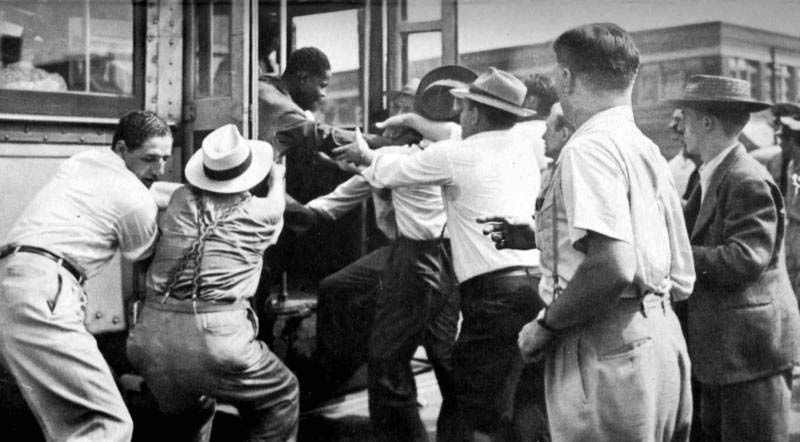
The complex racial norms of the 1940s in America both sustained the color barrier and supported its challenges. Around 1.5 million African Americans left the South during the 1940s, mainly for the industrial cities of the North. Once again, serious housing shortages and job competition led to increased tension between Blacks and whites. Race riots broke out and the worst of them occurred in Detroit in June of 1943 where forty deaths and seven hundred injuries took place. 

Detroit Race Riot (1943) •

(Image from the Detroit race riot in 1943)

    Moving into the 1950s, life was fantastic for white males. While the 1950s were something of a golden age for blue and white-collar workers, it was barely a time of expanding opportunities for African Americans. Rigid segregation was the rule throughout the country, especially with housing, jobs, and employment. In the South, public accommodations were segregated by law, while in the north it was usually happening by custom or de facto segregation. The new suburban neighborhoods that sprang up in the 1950s were almost completely white and this remained true for decades. According to Eric Foner, “As late as the 1990s, nearly 90% of suburban whites lived in communities with non-white populations less than 1%.” It wasn’t just housing that was hurting the black community. In the 1950s, half of black families lived in poverty. When they were able to get union jobs, black workers had less seniority than their white counterparts so their employment was less stable, and sub-standard segregated schools severely limited their educational opportunities. This is where it all begins with the case of Brown vs. Board of Education. 


Wednesday, October 26, 2022

Band of Angels Movie Reflection

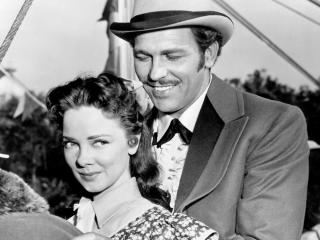
       BAND OF ANGELS" (1957) Review - Rosiepowell2000's blog

         Band of Angels is a romantic and dramatic film placed in the time of the American south before and during the Civil War. Southern belle, Amantha star, was a privileged white woman who grew up in the antebellum south. Her father, a Kentucky plantation owner, had been living off of borrowed money. After the passing of her father, the shocking discovery of the race of her mother flips her world upside down. Because of her recently discovered racial background, Imantha is considered black, although she looks white. After her father dies, Amantha is sent to be sold in place of the depths her father was in. Amantha is soon considered a slave and is sent to an auction in New Orleans. There, she was bought by a well-off man named Hamish Bond. Hamish saves her from the embarrassment she is being put through by buying her for an extreme price. Hamish owns multiple properties and treats all his slaves with dignity, and indeed has raised Rau-Ru as a son. On the boat ride back to Bond's home, he treats her with kindness and not as a slave. He then makes it clear that he intends to rape her. She is petrified by this and plans to hang herself from the ceiling in her room. Amantha arrives at the plantation and is greeted by an array of people. Amantha begins to grow unsure of what Hamish wants from her because she is technically a slave. Hamish shows interest in a different type of relationship with Amantha, one nothing like that of a slave and owner. Eventually, a romance develops between the two and Hamish offers Amantha freedom. Amantha is opposed to this and ops to stay. To make matter worse, Hamish bears a terrible secret from his past that makes new issues arise. Then, the Civil War breaks out. Eventually, New Orleans falls to the Union, making Hamish Bond a wanted man. He and Amantha are helped to escape by Rau-Ru (Hamish's right-hand man), who had fled and joined the Union army.

20 best movies like City of Angels (1998)  

      Although this movie receives a lot of criticism, it does deserve credit for approaching slavery in a different way. It is obvious that Amantha openly resents her blackness and is ashamed to have that in her blood. the movie did not hesitate to expose the ugliness of the slave trade and the system itself, and the fate of a large number of slaves who found themselves being forced by Union forces to continue struggling on the cotton and sugar plantations on behalf of the North. I think there are a few different aspects that the movie could have tapped into more to accentuate the plot and storyline of the movie. The movie is usually compared to "Gone with the Wind" although, I saw few similarities. 


Tuesday, October 25, 2022

Trial #2 Reaction (Plessy v. Ferguson)

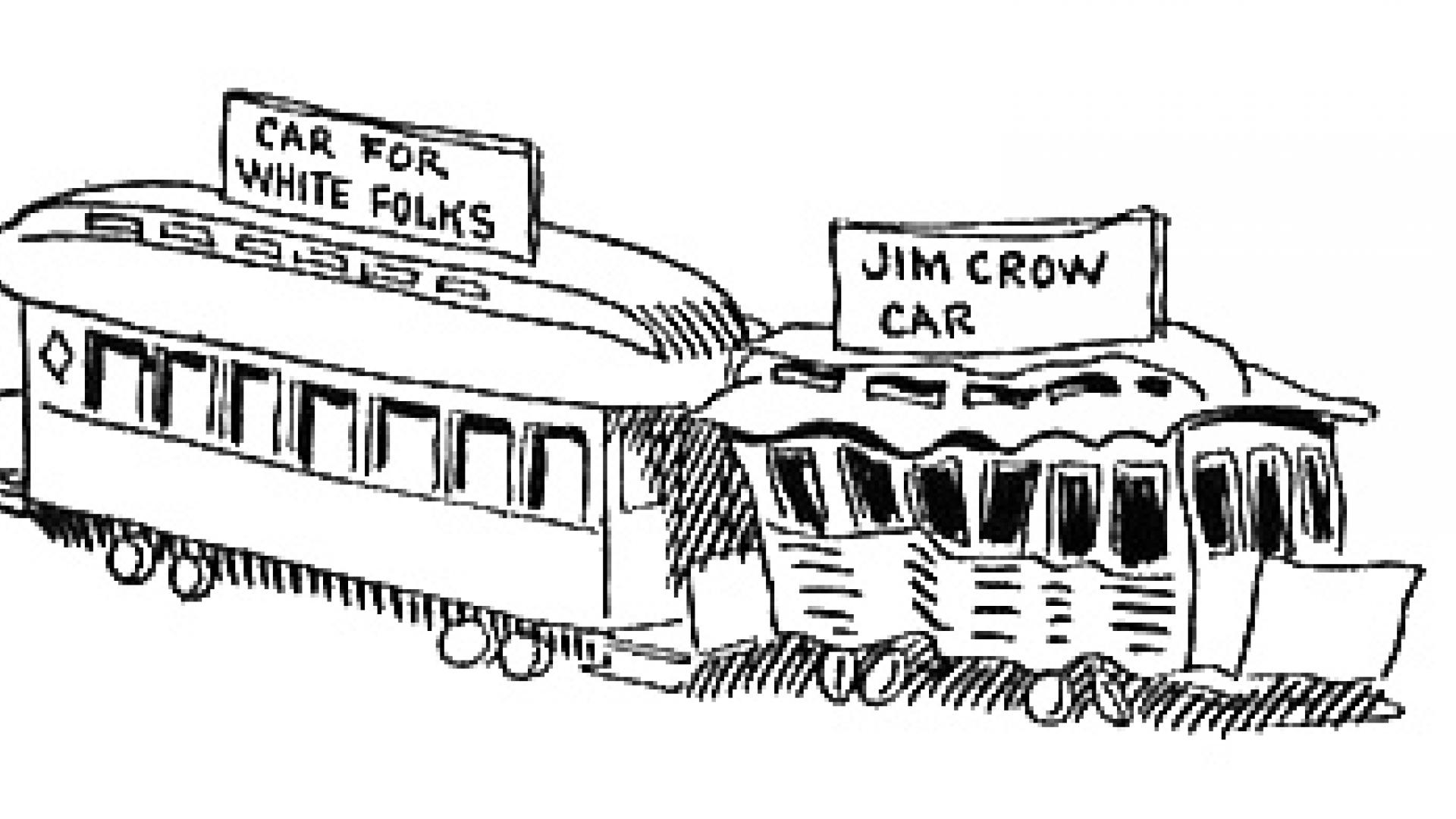
 How can one say that “all men are created equal” when the Plessy v. Ferguson case still happened? If all men are created equal, why are they separate? Why aren’t they allowed to have the same rights as white people including the same rights to business? As stated in a student's presentation, “no matter the color of the skin, business is business.” Homer Plessy was a paying customer who never caused an actual problem. The train is the primary form of transportation and Homer Plessy had every right to share the same car as a white person. One of the largest takeaways I had from this mock trial was the point one student made about what the difference is between slaves and free black people. How can black people be in our kitchen, cooking and cleaning for us but not in the same train car? It is also important to note that a plantation couldn’t run without black people. A child has to spend so much time with the mammy and she even acts as a second mother to the child. The lives of blacks and whites were intertwined so how were slaves so wanted when slavery was a thing, but now white people can’t even stand to be within feet of them? When did this change? Homer Plessy was only 1/8th African American. The argument of him being “black” can't even apply to him because it doesn’t accurately describe him. This brings up the question of how can u even classify him if he’s not straight white or black? Where then does he fall? Another question that was brought up was, “since when did we give the states the role of interpreting the constitution?” The state was doing this regarding the 14th amendment when its the court’s job, not the states, but this was never brought up in Plessy v. Ferguson. What does the race of the person holding the dollar have to do with the transaction? Doesn’t the business owner want to make money either way? Just because the person holding the dollar is black, doesn’t mean the dollar itself has a race too. This way of thinking is hurting the overall economy which people are overlooking. The 14th amendment doesn’t designate race like black citizens or white citizens. We’re all God’s children which brings in a morality aspect.

Plessy v. Ferguson & the Roots of Segregation | Understanding the American  South


The opposing side argued a couple of things. Louisiana had a law in place that whites and blacks were not supposed to be in the same place at the same time. Plessy was technically breaking the law and “social norms” by doing what he did. Louisiana claimed there was a “comfort” aspect to this as well and they were just trying to support society and social norms. The opposing side used examples from the Bible and talked about mixing things and how if it can exist through plants and animals then it should exist for mankind. Louisiana thought combining white and black people would just enhance problems on both sides which was their best defense. They also claimed this situation didn’t impact the 14th amendment because it doesn’t change the status of one’s citizenship. They claimed Plessy intentionally did this, knowing it would cause problems, therefore, he was in the wrong because of his ill intent and malice. 


Wednesday, October 19, 2022

EOTO: The Civil Rights Act of 1866 and 1875

In 1865, the war has just ended and the United States started to move into what was known as the Reconstruction Period. The reconstruction time period was a period that made many attempts to confront the issues of equality within the United States and to reunite the 11 states which had succeeded from the Union. After President Lincoln’s assassination in 1865, Andrew Johnson become president. Johnson allowed new state governments to be created. The former succeeded states were not allowed to succeed and continue the practice of slavery but they were allowed to handle their own affairs. This led to Black Codes. Lyman Trumbull was the one who initially introduced the Civil Rights Act. Published on April 9th, 1866, this act protected all persons in the United States and their civil rights and furnish the means of their vindication. This act guaranteed basic economic rights to create contracts, sue, inherit, purchase, lease, sell or own property. It also guaranteed citizens the right to engage in business and give evidence in court. The act also sought to overrule Black Codes. As stated by the act, all persons born in the United States (with the exception of American Indians) we hereby declare to be citizens of the United States and that such citizens of every race and color should have the same right as is enjoyed by white citizens. This gave citizenship a proper definition and with this, denying any person the right to citizenship because of their race became an act of racial discrimination which was illegal. Unfortunately, Andrew Johnson was not in favor of this act. He stated, “I regret that the bill which has passed both houses of Congress, entitled “An act to protect all persons in the United States and their civil rights, and furnish the means of their vindication,” contains provisions which I cannot approve consistently with my sense of duty to the whole people, and my obligations to the constitution of the United States. I am, therefore, constrained to return it to the Senate (the house in which it originated) with my objections to us becoming law.” Although he vetoed the act, congress was able to overturn it by having a 2/3rds majority and the act became official. This veto then led to him being impeached due to the imposing views between him and radical Republicans. Overall, The Civil Rights Act of 1866 declared all persons born in the United States to be citizens, "without distinction of race or color, or previous condition of slavery or involuntary servitude.”

 Andrew Johnson's Veto of the Civil Rights Act, 1866 - Bill of Rights  Institute

Sometimes called “The Enforcement Act,” the Civil Rights Act of 1875 was a United States federal law enacted during the Reconstruction era in response to civil rights violations against African Americans. The bill was passed by the 43rd United States Congress and signed into law by United States President Ulysses S. Grant on March 1, 1875. The act was designed to "protect all citizens in their civil and legal rights", providing for equal treatment in public accommodations and public transportation and prohibiting exclusion from jury service. It was originally drafted by Senator Charles Sumner in 1870 but was not passed until shortly after Sumner's death in 1875. The law was not effectively enforced, partly because President Grant had favored different measures to help him suppress election-related violence against blacks and Republicans in the Southern United States. The act did three important things. It granted all Americans, regardless of race, equal access to all public places. This included places like theatres, hotels, train stations, and restaurants. The act also set a penalty for anyone who denied equal access to someone else because of race. The penalty was $500 which was a significant amount of money at the time. The third thing it did was grant the rights of all citizens, regardless of race, to serve on a jury. This act changed the course of life for all African-American people and was a crucial part of the uphill climb to creating equality across whites and blacks.  

Cincinnati Mostly Ignored the Civil Rights Act of 1875 - Cincinnati Magazine

Sunday, October 9, 2022

Trail #1

    In the 1830s, the abolitionist movements started to skyrocket. From the 1830s to the 1860s, the movement to abolish slavery in America gained strength. People started to form their own opinions on slavery and dig deeper into the different aspects of it. The movement was led by free Black people who included significant names like Frederick Douglass. White supporters also joined him and they included people such as William Lloyd Garrison, founder of the radical newspaper The Liberator, and Harriet Beecher Stowe, who published the bestselling antislavery novel Uncle Tom’s Cabin. In 1830, the U.S. population was 12.8 million, with more than 2 million slaves who were still not close to being free. Slaves still had no constitutional rights. They could not testify in court against a white person or even leave the plantation without permission. Slaves often found themselves rented out, used as prizes in lotteries, or as wagers in card games and horse races. 

United States slave trade, 1830 | Library of Congress

    While many abolitionists based their activism on the belief that slaveholding was a sin, others were more inclined to the non-religious “free-labor” argument, which held that slaveholding was regressive, inefficient, and made little economic sense. The mass majority of Americans who joined the antislavery cause in the 1830s came from the countryside and small villages of the North. They typically grew up in deeply religious, reform-oriented families, creating the basis of their beliefs. Through the Louisiana Purchase, the question of slavery became both geographical and political and ushered in a period of national debate between pro- and anti-slavery states. They wanted to gain political and economic advantage. By 1820, Congress became obsessed with the debate over how to divide the newly acquired territories into slave states and free states. The Missouri Compromise- also referred to as the Compromise of 1820- was an agreement between the pro- and anti-slavery factions regulating slavery in the western territories. It prohibited slavery in new states north of the border of the Arkansas territory, excluding Missouri. Constitutionally, the Compromise of 1820 established a precedent for the exclusion of slavery from public territory acquired after the Constitution and also recognized that Congress had no right to impose upon states seeking admission to the Union conditions that did not apply to those states already in the Union. In 1820, the Missouri Compromise brought Missouri and Maine into the Union. By this time more than 20,000 Indians lived in virtual slavery on California missions. Introduction - Missouri Compromise: Primary Documents in American History -  Research Guides at Library of Congress

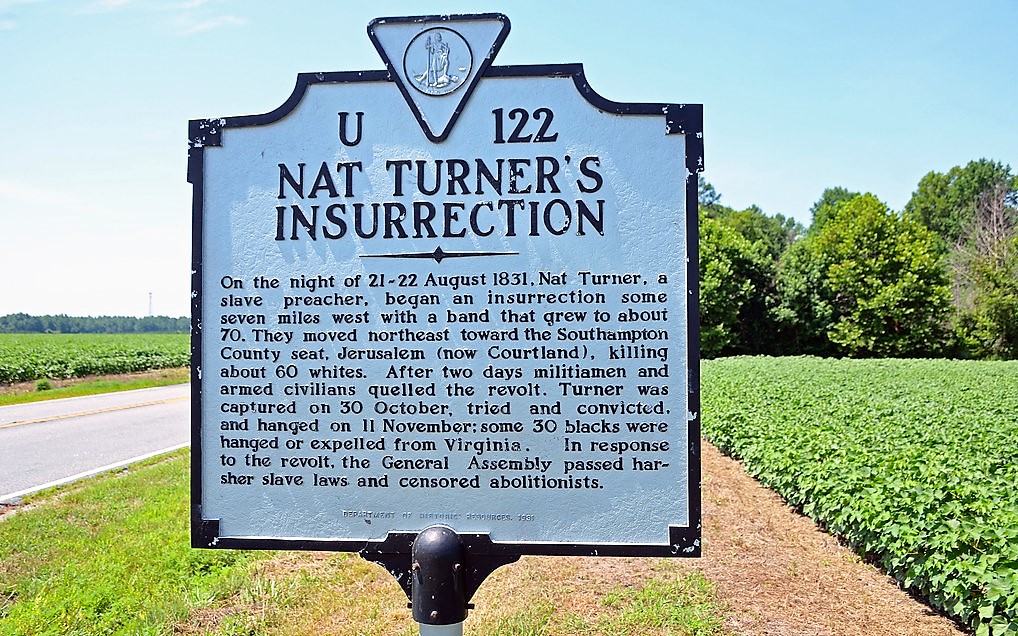
The same year, Congress made trade in foreign slaves an act of piracy (the unauthorized use or reproduction of another's work). In 1831, Nat Turner led the most brutal slave rebellion in United States history. It attracted up to 75 slaves and killed 60 whites. Supporters of slavery pointed to Turner’s rebellion as evidence that Black people were “inherently inferior barbarians requiring an institution such as slavery to discipline them, and fears of similar insurrections led many southern states to further strengthen their slave codes in order to limit the education, movement, and assembly of enslaved people.” This was monumental for slavery and its progression toward being abolished. 

Nat Turner Slave Rebellion: A Chronology

    In 1840, the slave population reached its peak of nearly 59,000. By 1860, there were 37,000 enslaved people, just 63 percent as many slaves as two decades earlier. All this being said, slavery was still a prominent thing, and people of color were still being treated awfully and with no respect, despite the movement towards the abolishment of slavery.


Sunday, October 2, 2022

Gone with the Wind Reflection

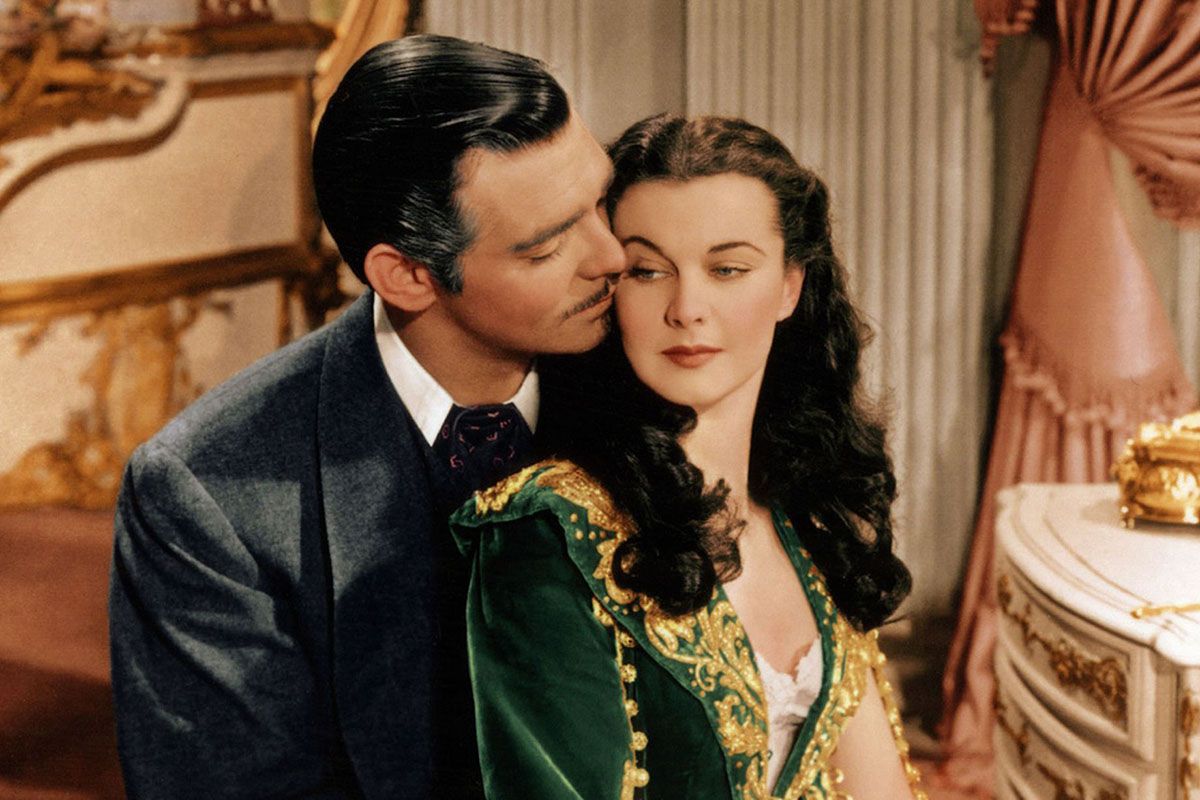
 Set in on a Georgia Plantation in 1861 during the Civil War, Gone with the Wind is a tragic love story packed with mature symbolism and language. Gone with the Wind was created to communicate messages about war and the impacts of it. It was also created as a metaphor of the way of life before the Civil War. 

Gone With the Wind' 80th Anniversary: 15 Things You Didn't Know About the  Classic Movie

Some critics say that the movie was created to persuade people not to get involved with war because it causes death and destruction. There are a variety of hidden themes throughout the movie, one of which includes fog which appears a couple of times. Another theme present is feminism and that is shown throughout the film as the women overcome hardships and situations. It can be argued that some of the characters are symbols for involvement in war and war in general. Scarlett fights for a victory for love and then ends up realizing that the fight wasn’t worth it in the end. She uses people like Rhett for her own benefit to get what she wants. Melanie symbolizes peace within this war and it is trying to be communicated that without her advice, there would be no control over the characters and the situation. Mammy can be interpreted as someone who doesn’t fight in the war but still endures the consequences. This ties back to how war hurts everyone, even people who don’t deserve it. The movie covers aspects of survival, the love of home, and obviously, war. A fun fact that I found out about the movie when doing my own research was that during the movie premier, no African-Americans were not allowed to attend.

Gone With the Wind' is also a Confederate monument, but on film instead of  stone - The Washington Post 

This ended up being ironic because the first African-American to be nominated for, and win, an academy award was Hattie McDaniel who was the actress in a supporting role for the film. She was also the first time an African-American attended the awards as a guest. Hattie McDaniel - Wikipedia

This movie is said to be one of the most important films that the United States has ever created and is a must-see.

Justice Harlans Descending Opinion in Plessy v Ferguson

 During what turned out to be one of the most influential and important court cases of all time where the court approved the principle of se...